
Most people think about protecting their hood or front bumper when they consider paint protection film for headlights. But what about the lights themselves? Headlights face the same road debris and sun exposure that damages your paint. And when they start looking cloudy or chipped, the whole front end of your vehicle suffers.
The good news is that the same clear film protecting painted surfaces works on headlight lenses too. A thin layer of polyurethane acts like a clear barrier, blocking UV rays and cushioning impacts before they cause problems.
This article covers why headlights deteriorate over time, how protective film addresses those issues, and what professional installation involves.
Why Headlight Lenses Cloud Over Time
Modern headlights are made from polycarbonate plastic rather than glass. This material is lighter and more impact-resistant, making it safer in a collision. But polycarbonate reacts to ultraviolet light over time, and that reaction causes the cloudy, yellowed appearance you see on older vehicles.
The process happens gradually. Sun exposure breaks down the outer layer of the lens, causing it to become hazy. Here in Columbus and Phenix City, vehicles get plenty of sun exposure year-round, which accelerates the degradation. Without some form of protection, most headlight lenses start showing wear within a few years.
Rock Chips and Road Debris Damage
UV exposure isn't the only threat to your headlights. Every time you drive, small rocks and debris kick up from the road surface. These impacts hit your headlight lenses at highway speeds, creating tiny chips and pits over time.
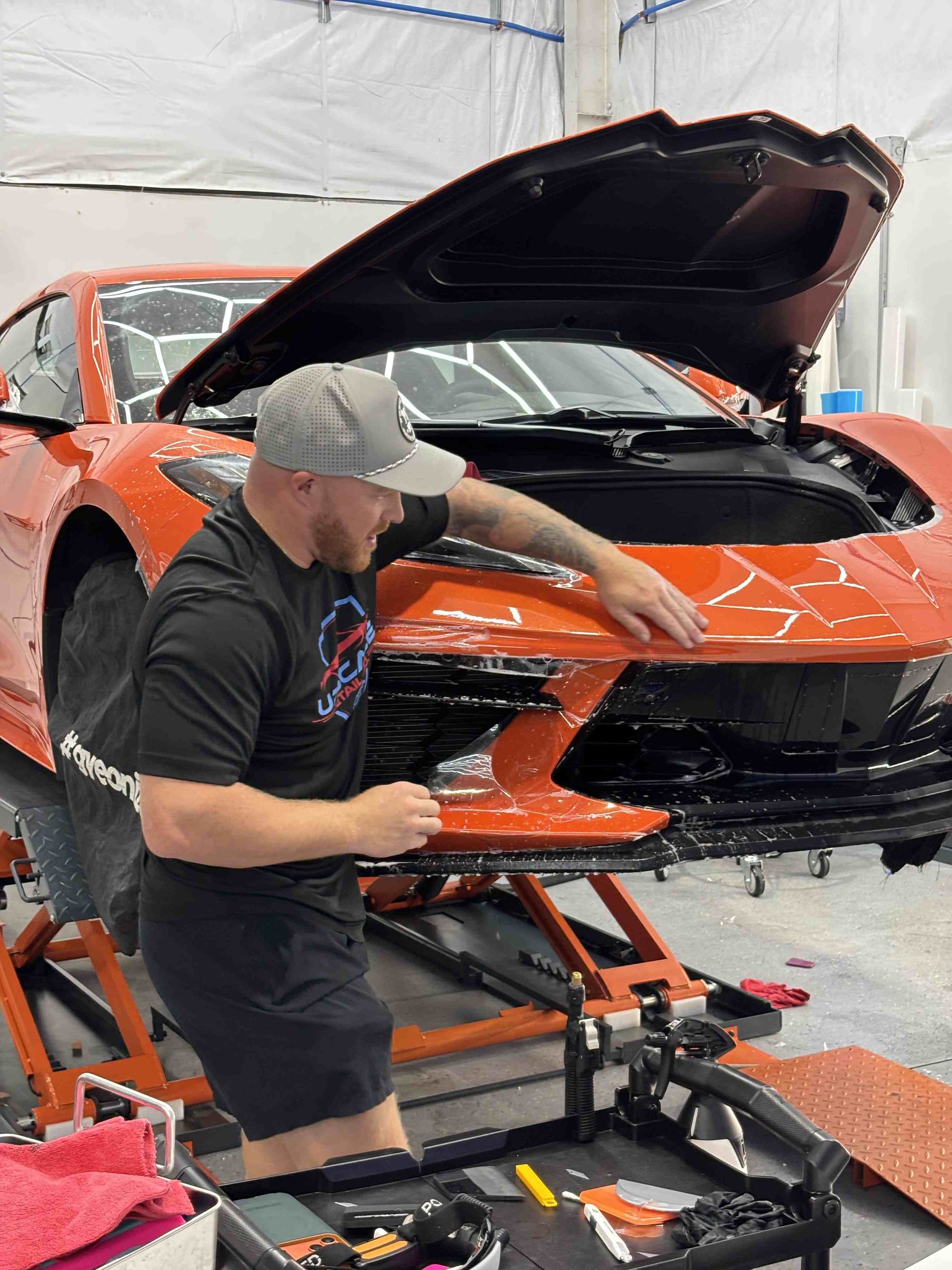
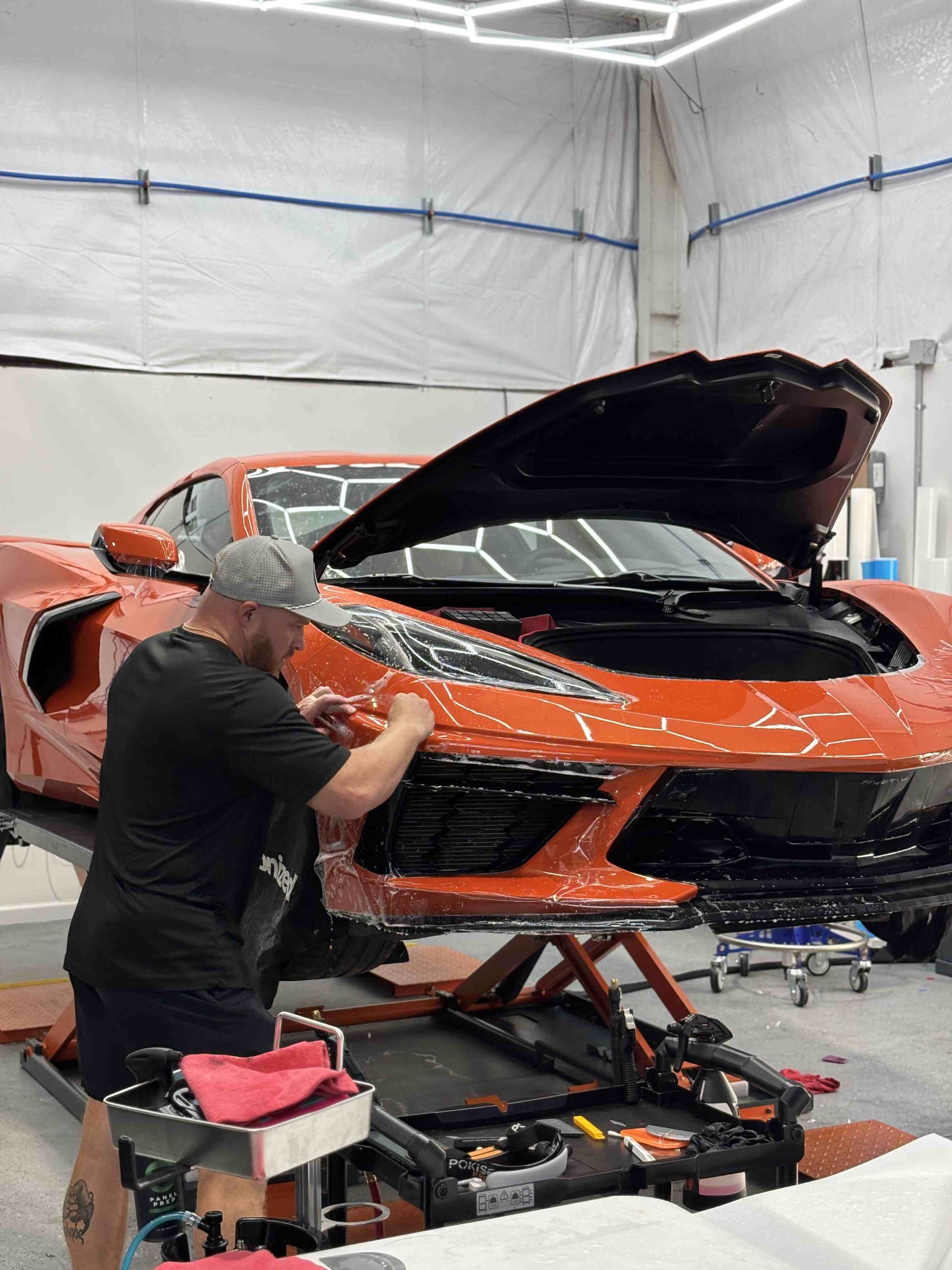
Paint protection film for headlights works the same way it does on your hood or bumper. The film takes impacts from road debris before they can damage the lens underneath. Headlights sit right in the impact zone alongside your bumper and hood. Protecting them makes just as much sense as protecting your paint.
How Protective Film Guards Your Headlights
Paint protection film creates a barrier between your headlight lenses and the outside environment. The film is made from self-healing urethane material that flexes on impact instead of cracking. Minor surface marks disappear on their own when exposed to heat from sunlight or warm water.
The film also provides UV protection. By blocking harmful rays before they reach the polycarbonate surface, the film helps prevent the oxidation that causes clouding and yellowing. Quality protective film is optically clear, so it won't affect your headlight output or appearance. When installed properly, you can't even tell it's there.
Additional Advantages of Headlight Film
Using paint protection film for headlights offers more than just damage prevention. The hydrophobic surface causes water to bead and slide off rather than pooling, keeping your lights cleaner between washes.
The smooth film surface also resists staining from environmental contaminants. Bug splatter, bird droppings, and tree sap are easier to clean off film than they would be from bare plastic.
Some other benefits worth considering:
- Self-healing properties handle minor surface marks automatically
- Clear appearance maintains your vehicle's factory look
- Protection helps preserve the resale value of your vehicle
What Professional Installation Involves
Getting paint protection film for headlights installed by professionals ensures the film adheres properly and lasts as long as possible. At Upscale Detail Co LLC, the installation team prepares each surface carefully before applying any film.
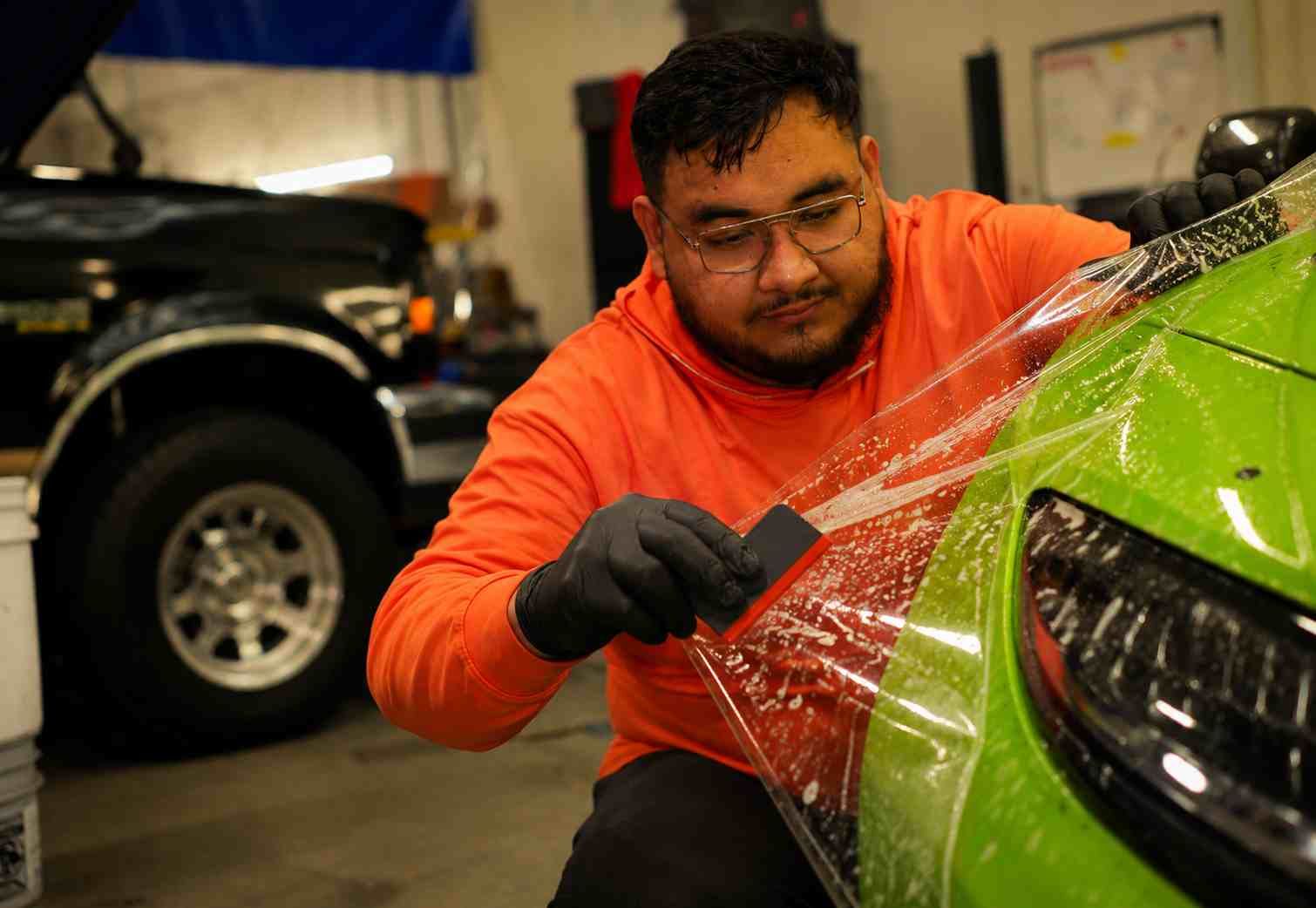
The process starts with a thorough cleaning of the headlight lenses. Any dirt, grime, or existing contamination gets removed so the film bonds directly to a clean surface. The film itself is precision cut using computer patterns to match your specific vehicle's headlight shape. The team then applies the film carefully, working out air bubbles and ensuring smooth edges that won't lift over time.
Why DIY Installation Often Falls Short
You can purchase headlight film from retailers and try installing it yourself. But professional results look better and last longer for a reason. The application requires skill that takes time to develop.
Common DIY problems include:
- Air bubbles trapped under the film
- Edges that start lifting within weeks
- Film that doesn't quite fit the lens shape
- Improper surface preparation leading to poor adhesion
Professional installation avoids these issues because technicians have done hundreds of applications. At Upscale Detail Co LLC, the team brings years of detailing industry training to every vehicle they work on.
When to Consider Headlight Protection
The best time to install paint protection film for headlights is when your vehicle is new or the lenses are still in good condition. Protecting them before damage occurs means you never have to deal with clouding or chips in the first place.
If your headlights already show some wear, you may need paint correction or restoration work before applying protective film. Adding film over damaged lenses just locks in that existing damage.
Consider headlight protection if you drive regularly on highways or gravel roads, plan to keep your vehicle for several years, or park outside where sun exposure is constant.
Combining Headlight Protection With Full Front Coverage
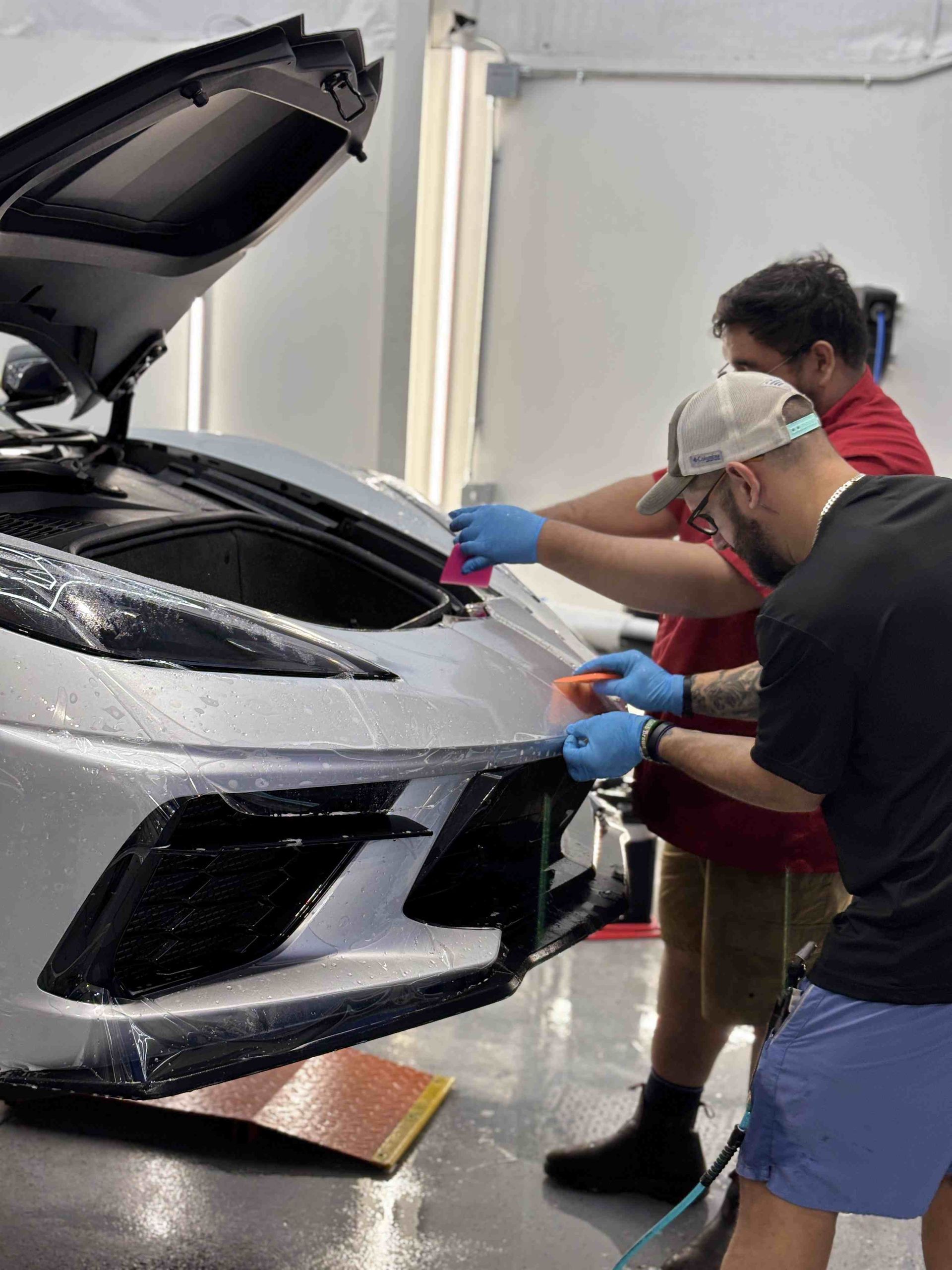
Many vehicle owners add headlight protection as part of a full front-end PPF package. Since the hood, bumper, and headlights all face the same road conditions, protecting them together makes practical sense.
Front-end packages typically include mirrors, hood, fenders, and front bumper along with headlight shields. This approach covers the areas that handle about 80% of the damage your vehicle encounters during normal driving.
Long-Term Value of Headlight Protection
Clear, undamaged headlights contribute to your vehicle's appearance and its value. When buyers evaluate a used car, cloudy or chipped headlights signal neglect and age. Keeping your lenses in great condition helps maintain the overall impression of a well-cared-for vehicle.
The protection also saves you from future headlight restoration costs. Professional lens restoration can be expensive, and the results are temporary since the protective factory coating gets removed in the process. Film protection avoids that cycle entirely. Think of it as preservation rather than repair.
Ready to protect your headlights and keep them looking clear for years? Contact the team at Upscale Detail Co LLC to discuss your options.
Frequently Ask Questions
How long does paint protection film last on headlights
Quality PPF typically lasts 7 to 10 years with proper care. Headlight film sees the same conditions as body panels and holds up well under normal driving. The self-healing properties help maintain the film's appearance over time.
Will the film affect my headlight brightness or beam pattern
No. Optically clear film allows light to pass through without distortion or reduction. When installed correctly, the film is invisible and has no impact on how your headlights perform. You get full protection without any compromise to visibility or safety.
Can film be applied over headlights that are already yellowed
Film should be applied to lenses in good condition. If your headlights have existing oxidation or yellowing, they need restoration work first. Applying film over damaged lenses just preserves that damage underneath.
Is headlight film the same product used on painted surfaces
Yes, it's the same self-healing urethane material used to protect paint. The film is simply cut to fit headlight lens shapes instead of body panels. The properties that make it effective for paint protection work equally well on polycarbonate headlight lenses.
How do I maintain protected headlights
Regular washing with a pH-neutral soap keeps the film clean. Avoid automatic washes with brushes, as these can damage the film's surface. The hydrophobic properties make cleaning easier since water and contaminants slide off more readily.